




Lucy McKim Garrison | Collector and Credited with Musically Notating African American Music in 1862

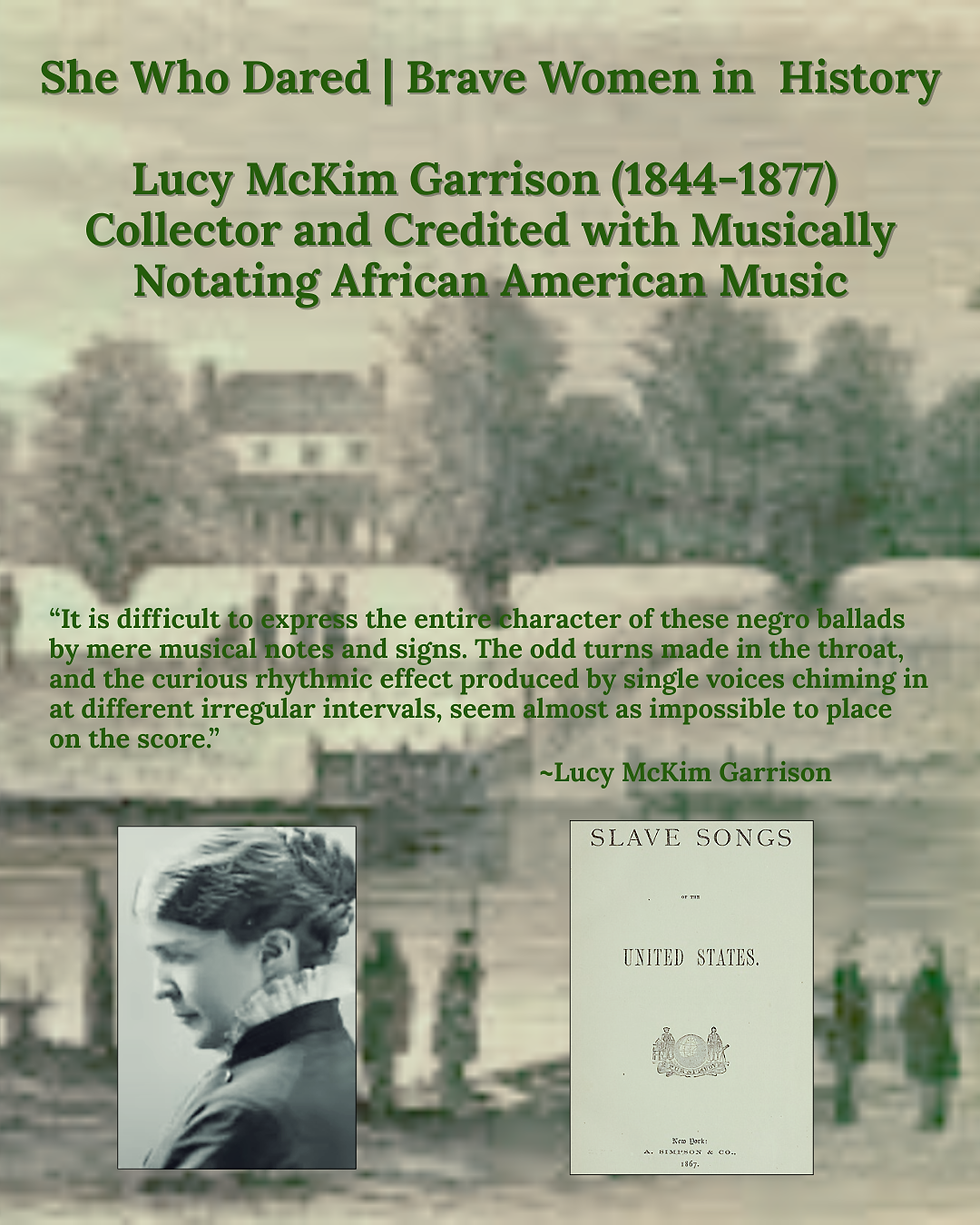
After the Union captured the South Carolina Sea Islands in 1861, Lucy McKim Garrison (1842-1877) and her father traveled to them. About 10,000 enslaved people were now free. Lucy became enthralled by the emotions expressed in African American songs and their great diversity of styles. She began writing their words and setting them in musical notation. Between her return from the Sea Islands to Philadelphia in 1862, she published three of the songs before returning to teaching.
After personal losses from the war, she withdrew from public work, but after marrying in 1865, she returned to her most influential collaboration with William Frances Allen and Charles Pickard Ware. Both worked in Port Royal and collected songs of the Gullah Geechee people of Saint Helena Island. In 1867, the three published “Slave Songs of the United States.” This was the first and most influential publication of 136 African American spirituals collected from various sources.
African American enslaved communities used music and song to communicate their miseries and lift themselves above a horrendous life. Slaveholders attempted to destroy African culture to break and control them, yet their music sustained them and became a part of their resistance. Some songs came about after the war, but still reflected slavery as it was.
Songs differed from state to state. In songs from Virginia, the melody jumped in unexpected ways. To someone used to church hymns, the tune would sound bent, slanted, or off-center. The songs from South Carolina originated in the isolated Gullah Geechee culture, giving their sound a more uniform character. North Carolina songs were different because they came from three distinct environments. Maritime labor shaped the Coastal and Tidewater songs, with a solo caller echoed by a chorus of those rowing. Piedmont plantations were smaller, and Black and white workers worked together. Appalachian folk music influenced that of the few enslaved workers in Western North Carolina. Tennessee and Florida Black songs influenced by white music.


Comments